
What Freeze-Thaw Cycles Can Do to Your Chimney
 What is a Freeze-Thaw Cycle?
Freezing and thawing, as the name implies, happens when water from rain or melting snow gets into or between the bricks of a masonry chimney. When outdoor temperatures drop below freezing, water freezes and expands. When the air warms back up, the water leaks out. This cycle can happen multiple times during our rough winters.
Each time water freezes in the masonry, it expands, causing damage. At first, it’s not obvious to the naked eye, but as the winter rolls along, ever-larger spaces for incoming water allow for greater damage.
Over time, you may see cracked or missing bricks, mortar joints between the bricks missing, or a chimney leaning to one side. If this is ignored, the chimney can eventually collapse.
Where is Water Getting into Your Chimney?
This is the first question to ask. Water can intrude into a chimney system in several ways. Here are the five most common.
-
Through Cracked Bricks
Cracked chimney bricks aren’t uncommon and can be caused by poor-quality bricks, lightning strikes, old age, and, yes, freeze-thaw cycles.
-
Through Porous Brick Surfaces
Bricks are strong, but they’re not solid. They’re porous, and water can easily seep into them. White masonry staining is a sign that this is happening.
-
Through Deteriorated Mortar
The mortar that holds the bricks together can fall away due to shoddy workmanship, poor mortar mixtures, certain weather events, and internal freezing and thawing.
-
Through a Damaged Chimney Crown
The concrete chimney crown forms a protective layer over the top of the chimney, except for the flue opening. When cracked, crowns allow water to run down and begin to penetrate the chimney’s uppermost bricks.
-
Through Damaged Chimney Flashing
The flashing that seals the gap between the chimney and roof can become dislodged, warped, rusted, or otherwise damaged, allowing water to enter the bricks below the roofline. (Because of warmer temperatures within the house structure, water leaking through flashing isn’t as big a concern in the context of freeze-thaw cycles, but it’s still a concern.)
 Repairing and Preventing Freeze-Thaw-Cycle Damage
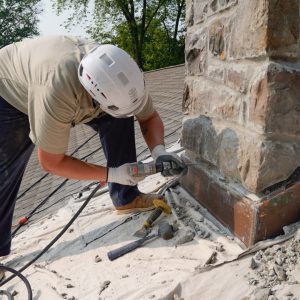
Chimney repair crews have several ways to address chimneys damaged by freeze-thaw cycles and other causes.
-Brick replacement
-Tuckpointing to replace areas of missing mortar
-Chimney crown repair or rebuilding
–Chimney flashing resealing or replacement
When caught in time, these repair jobs are relatively straightforward. If early damage is ignored, the result can be a chimney that dangerously leans to one side or collapses entirely.
After repair or rebuilding work is finished, you should have your chimney sprayed with a waterproof sealant. This will keep rain and melting snow out of the bricks and mortar while allowing naturally occurring moisture on the masonry surface to escape through a “vapor-permeable” barrier.
Is Your Chimney Damaged from Harsh New Jersey Winters?
If your chimney has been damaged by freeze-thaw cycles or any other event, Approved Chimney is standing by to help. We offer licensed chimney repairs, inspections, rebuilding, and CSIA-certified sweeping.
When your chimney needs help, call us first. Reach a chimney professional by phone or through our contact form.